


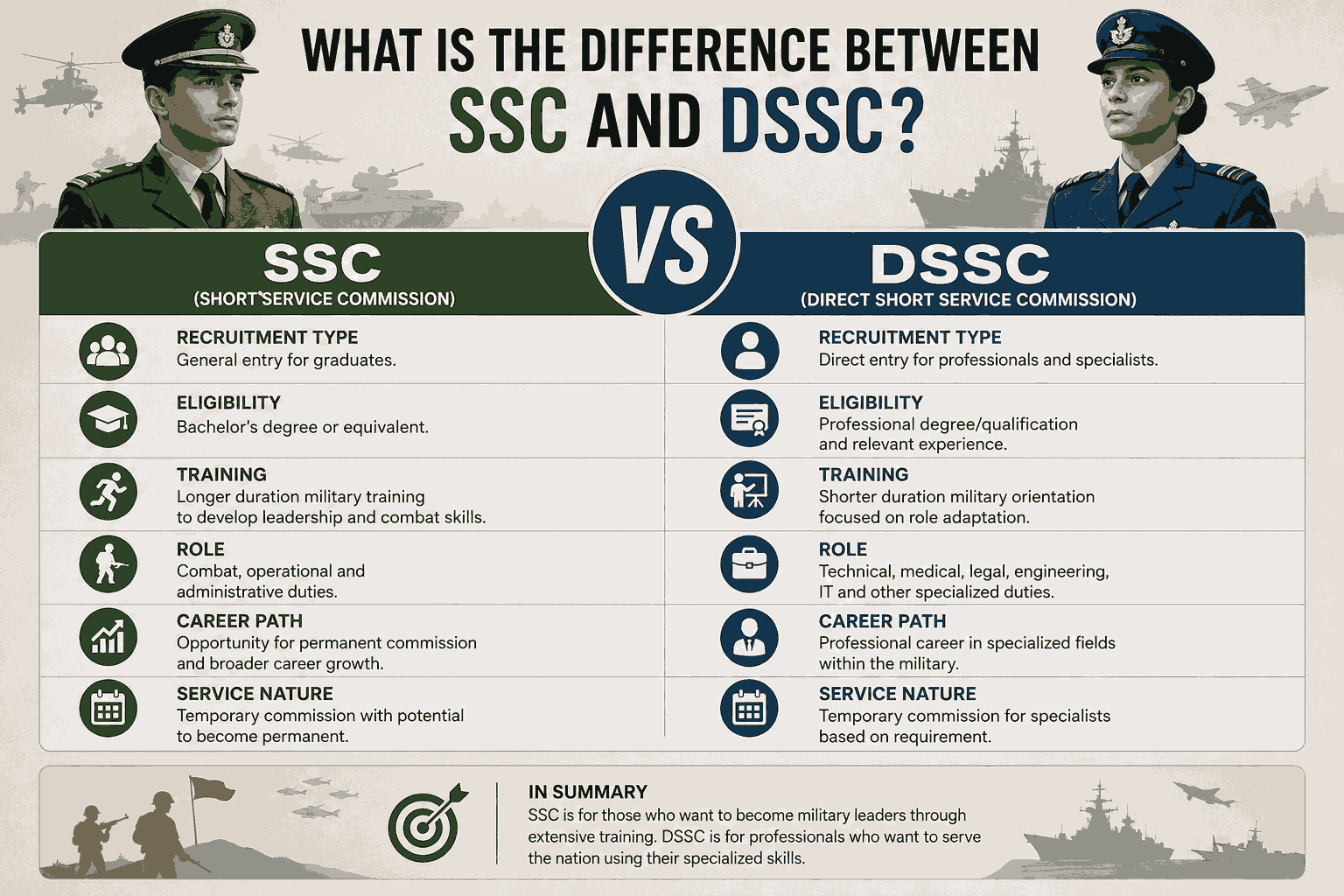
When discussing military recruitment, especially in countries like Nigeria and India, two common terms often appear: SSC and DSSC. Many people searching for military career opportunities usually ask: What is the difference between SSC and DSSC?
Although both are methods of joining the armed forces, they differ significantly in qualifications, recruitment processes, training methods, and career paths. Understanding these differences is important for anyone considering a military career.
In this detailed guide, you will learn everything about SSC and DSSC, including eligibility, benefits, disadvantages, salary expectations, and which option may be better for your career goals.
Understanding SSC and DSSC
What Does SSC Mean?
SSC stands for Short Service Commission. It is a temporary commission in the military that allows individuals to serve as commissioned officers for a limited number of years.
Under SSC, candidates are usually trained from scratch to become military officers. The program is ideal for civilians who want to join the armed forces and gain leadership experience.
In many countries, SSC officers can later apply for permanent commission opportunities depending on performance and military needs.
Key Features of SSC
- Open to civilians
- Requires officer training
- Limited service duration
- Possibility of permanent commission
- Available in Army, Navy, and Air Force
What Does DSSC Mean?
DSSC means Direct Short Service Commission. Unlike SSC, DSSC is designed mainly for professionals and specialists who already possess specific educational qualifications or technical skills.
DSSC candidates are recruited directly into the military to fill specialized roles such as:
- Doctors
- Lawyers
- Engineers
- Nurses
- IT professionals
- Chaplains
- Psychologists
Instead of undergoing full military foundational training like SSC candidates, DSSC recruits usually receive shorter military orientation training because they already possess professional expertise.
Major Difference Between SSC and DSSC
The primary difference between SSC and DSSC lies in the entry method and purpose of recruitment.
| Feature | SSC | DSSC |
|---|---|---|
| Full Meaning | Short Service Commission | Direct Short Service Commission |
| Recruitment Type | General military officer recruitment | Specialized professional recruitment |
| Educational Requirement | Usually bachelor’s degree or equivalent | Professional qualification required |
| Training Duration | Longer officer training | Shorter orientation training |
| Career Field | Combat and administration | Technical and professional services |
| Experience Needed | Not always required | Often requires professional experience |
| Service Nature | Temporary commission | Temporary commission for specialists |
Eligibility Requirements for SSC
Educational Qualifications
SSC applicants usually need:
- Bachelor’s degree
- Minimum academic grade requirement
- Basic leadership potential
In some countries, diploma holders may qualify for certain SSC categories.
Age Requirement
Age requirements vary depending on the military branch and country. Most SSC programs accept candidates between:
- 19 to 30 years old
Physical Fitness Standards
SSC candidates must pass:
- Medical examinations
- Fitness tests
- Endurance tests
- Psychological evaluations
Military organizations maintain strict standards because SSC officers may participate in combat and operational duties.
Eligibility Requirements for DSSC
Professional Qualifications
DSSC focuses on specialized professions. Applicants usually need:
- Professional certifications
- Degrees in specific fields
- Work experience
- Licensing where applicable
For example:
- Medical doctors need medical licenses
- Lawyers need bar certification
- Engineers may need professional registration
Age Requirements
DSSC age limits are often slightly higher because professional experience is valued.
Typical DSSC age range:
- 22 to 40 years old
Less Intensive Combat Training
Although DSSC officers are military personnel, their roles are often technical or administrative. Their training focuses more on military adaptation rather than full combat preparation.
Training Difference Between SSC and DSSC
SSC Training Structure
SSC recruits usually undergo:
- Full military officer cadet training
- Combat drills
- Weapon handling
- Leadership development
- Tactical exercises
- Field operations
Training can last several months to years depending on the military institution.
Examples of military academies include:
- Nigerian Defence Academy
- Indian Military Academy
DSSC Training Structure
DSSC candidates receive:
- Military orientation
- Officer induction
- Leadership introduction
- Military ethics training
Their technical expertise is already established before recruitment.
Training duration is usually shorter compared to SSC.
Career Opportunities in SSC and DSSC
SSC Career Path
SSC officers may serve in:
- Infantry
- Intelligence
- Logistics
- Engineering corps
- Aviation
- Naval operations
Some SSC officers eventually secure permanent commission and build long-term military careers.
DSSC Career Path
DSSC officers mainly work in specialized departments such as:
- Medical corps
- Legal services
- Religious affairs
- Cybersecurity
- Information technology
- Education and training
Their professional expertise remains central to their duties.
Advantages of SSC
1. Leadership Development
SSC provides strong leadership and discipline training.
2. Opportunity for Permanent Commission
Outstanding SSC officers may transition into permanent military careers.
3. Broader Military Experience
SSC officers experience:
- Combat leadership
- Tactical operations
- Field command
4. Personal Growth
SSC develops:
- Confidence
- Physical endurance
- Strategic thinking
Advantages of DSSC
1. Direct Entry for Professionals
DSSC allows professionals to join the military without starting from beginner-level military education.
2. Faster Recruitment Process
Since professional skills already exist, recruitment is often faster.
3. Specialized Career Roles
Professionals continue practicing within their fields while serving in the military.
4. Higher Starting Rank in Some Cases
Some DSSC recruits may enter with advanced officer ranks depending on qualifications and experience.
Disadvantages of SSC
1. Intense Training
SSC training can be physically and mentally demanding.
2. Longer Training Period
Officer cadet programs require significant time commitment.
3. Uncertain Permanent Commission
Not all SSC officers become permanent military officers.
Disadvantages of DSSC
1. Limited Combat Experience
DSSC officers may not gain extensive operational combat exposure.
2. Restricted Career Flexibility
Career progression often remains within specialized departments.
3. Professional Requirements Can Be Strict
Applicants need advanced credentials and certifications.
SSC vs DSSC Salary Differences
Salary structures differ by country and military branch. However, DSSC officers may sometimes receive higher starting benefits because of their specialized qualifications.
Factors affecting salary include:
- Rank
- Years of service
- Technical specialization
- Country
- Military branch
For official recruitment and salary details, military websites provide updated information:
Which Is Better Between SSC and DSSC?
The better option depends on your goals and qualifications.
Choose SSC If You:
- Want full military leadership training
- Desire combat and operational experience
- Are starting a military career from scratch
- Want broader military exposure
Choose DSSC If You:
- Already have professional qualifications
- Want to serve using your expertise
- Prefer technical or specialist military roles
- Want shorter military training
How to Apply for SSC or DSSC
Step 1: Visit Official Military Recruitment Websites
Always apply through official recruitment portals to avoid scams.
Examples:
Step 2: Check Eligibility Requirements
Carefully review:
- Age limits
- Educational requirements
- Medical standards
- Documentation requirements
Step 3: Complete Online Application
Submit:
- Academic credentials
- Identification documents
- Professional certifications (for DSSC)
Step 4: Attend Screening and Training
Successful candidates proceed to:
- Aptitude tests
- Medical screening
- Physical fitness evaluation
- Training school
Common Misconceptions About SSC and DSSC
“DSSC Is Easier Than SSC”
Not necessarily. DSSC requires advanced professional expertise, which can be difficult to obtain.
“SSC Officers Cannot Become Permanent Officers”
Many SSC officers later transition to permanent commission based on performance and available opportunities.
“DSSC Officers Are Not Real Military Officers”
DSSC officers are fully commissioned military officers. They simply serve in specialized capacities.
Conclusion
Understanding what is the difference between SSC and DSSC is essential for anyone planning a military career. While both pathways provide opportunities to serve as commissioned officers, they target different categories of candidates.
- SSC focuses on training civilians into full military officers through intensive leadership and combat preparation.
- DSSC recruits already qualified professionals into specialized military roles with shorter military orientation training.
Choosing between SSC and DSSC depends largely on your educational background, professional experience, and long-term career goals. Both options offer honorable service, leadership opportunities, and valuable career development.
Also Read: Which Country Is Cheapest to Study for Nigerian Students?
FAQs About SSC and DSSC
1. Can an SSC officer become a permanent officer?
Yes. In many military organizations, SSC officers can apply for permanent commission opportunities based on performance and military requirements.
2. Is DSSC only for professionals?
Yes. DSSC mainly targets professionals such as doctors, engineers, lawyers, nurses, and IT specialists.
3. Which training is tougher between SSC and DSSC?
SSC training is generally tougher because it includes full military combat and leadership preparation, while DSSC training focuses mainly on military orientation for specialists.






+ There are no comments
Add yours