

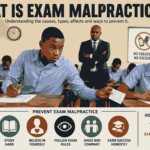




Education is one of the strongest foundations of any successful society. Through examinations, schools and educational bodies assess the knowledge, understanding, and abilities of students. However, the integrity of examinations is often threatened by a serious problem known as exam malpractice. Over the years, exam malpractice has become a major issue affecting schools, colleges, universities, and even professional institutions across many countries, including Nigeria.
Many students, parents, teachers, and educational stakeholders ask questions such as: What is exam malpractice? Why do students engage in it? What are the consequences? How can it be stopped? Understanding this topic is very important because exam malpractice does not only affect students individually, but it also damages the educational system and the future of society.
In this detailed article, we will explain everything about exam malpractice, including its meaning, causes, forms, effects, prevention methods, and solutions. The article is written in a clear and human-friendly style to help students, teachers, researchers, and general readers fully understand the concept.
What Is Exam Malpractice?
Exam malpractice refers to any illegal, dishonest, or unethical behavior carried out before, during, or after an examination in order to gain unfair advantage or better results.
In simple terms, exam malpractice occurs when a student cheats in an examination instead of relying on personal knowledge and preparation. It involves violating examination rules and regulations set by schools or examination bodies.
Educational organizations such as the West African Examinations Council and Joint Admissions and Matriculation Board strongly condemn examination malpractice because it destroys fairness and credibility in education.
Exam malpractice can happen in different forms, including copying from another student, bringing unauthorized materials into the examination hall, impersonation, collusion, bribery, and the use of electronic devices for cheating.
Meaning of Examination Malpractice in Education
Examination malpractice in education means any deliberate action that goes against examination ethics and procedures. It is an act of dishonesty aimed at manipulating examination results.
The purpose of examinations is to test a student’s true level of understanding and academic performance. When students cheat, the examination no longer reflects genuine learning.
Exam malpractice can be committed by:
- Students
- Teachers
- Parents
- Examination officials
- School administrators
- Invigilators
This makes the issue more dangerous because it can involve several individuals working together to manipulate examination outcomes.
Types of Exam Malpractice
There are many forms of exam malpractice practiced in schools and examination centers today. Some are simple, while others are highly organized and sophisticated.
1. Copying From Other Students
This is one of the most common forms of exam malpractice. A student secretly copies answers from another candidate during the examination.
Copying may involve:
- Looking at another student’s script
- Exchanging answer sheets
- Whispering answers
- Sign language communication
2. Bringing Foreign Materials Into the Exam Hall
This involves entering the examination hall with unauthorized materials known as “expo” or “microchips.”
Examples include:
- Written notes
- Textbooks
- Printed papers
- Tiny handwritten papers
- Answers hidden in clothes or desks
Some students even write answers on:
- Palms
- Thighs
- Handkerchiefs
- Water bottles
- Calculator covers
3. Impersonation
Impersonation happens when another person writes an examination on behalf of a candidate.
In many cases:
- Brilliant students are paid to write exams for others
- Fake identities are used
- Passport photographs are changed
Impersonation is considered a serious criminal offense in many countries.
4. Leakage of Examination Questions
This occurs when examination questions are exposed before the official examination time.
Question leakage may involve:
- Corrupt officials
- Teachers
- Printing press workers
- Cybercriminals
Students who gain access to leaked questions before the examination have unfair advantage over others.
5. Collusion
Collusion occurs when students cooperate illegally during an examination.
Examples include:
- Group discussions during exams
- Sharing answers
- Coordinated cheating arrangements
Sometimes invigilators or teachers assist students in collusion.
6. Electronic Cheating
Modern technology has increased electronic examination malpractice.
Students now use:
- Smartphones
- Smart watches
- Bluetooth devices
- Hidden earphones
- Internet-connected gadgets
Social media platforms and messaging apps may also be used to share answers illegally.
7. Bribery and Corruption
Some students or parents bribe examination officials for assistance.
Bribery may involve:
- Paying for leaked questions
- Paying invigilators to ignore cheating
- Buying marks illegally
- Influencing examination supervisors
This type of malpractice weakens public trust in education.
8. Alteration of Scores
This happens after examinations when results are illegally changed.
It may involve:
- Hacking examination databases
- Paying officials to increase marks
- Manipulating result sheets
Score alteration is highly unethical and punishable by law.
Major Causes of Exam Malpractice
Understanding the causes of exam malpractice is important because it helps in finding lasting solutions.
1. Fear of Failure
Many students engage in exam malpractice because they are afraid of failing examinations.
Factors contributing to fear include:
- Pressure from parents
- Competition among students
- Fear of disappointment
- Fear of repeating classes
Instead of studying hard, some students look for shortcuts.
2. Poor Preparation
Lack of proper preparation is another major cause of exam malpractice.
Students who:
- Skip classes
- Avoid reading
- Waste time
- Depend on miracles
often panic during examinations and decide to cheat.
3. Pressure From Parents
Some parents place excessive academic expectations on their children.
Examples include:
- Demanding only high grades
- Comparing children with others
- Threatening punishment for poor performance
This pressure may push students into dishonest practices.
4. Corruption in Society
In societies where corruption is common, exam malpractice may become normalized.
When students see:
- Corrupt leaders succeeding
- Dishonesty being rewarded
- Rules being ignored
they may believe cheating is acceptable.
5. Poor Teaching Methods
Ineffective teaching contributes greatly to examination malpractice.
When teachers:
- Fail to explain subjects properly
- Skip important topics
- Show little commitment
students may struggle academically.
6. Lack of Confidence
Some students have low self-confidence and believe they cannot pass examinations through honest effort.
As a result:
- They depend on cheating
- They seek leaked answers
- They rely on malpractice networks
7. Inadequate Examination Supervision
Weak supervision encourages malpractice.
When invigilators:
- Arrive late
- Ignore suspicious behavior
- Accept bribes
students take advantage of the situation.
8. Desire for Certificates
Some individuals value certificates more than actual knowledge.
This obsession with paper qualifications encourages students to obtain results by any means possible.
Effects of Exam Malpractice
Exam malpractice has serious negative consequences for students, schools, and society.
1. Destruction of Academic Integrity
Examinations lose credibility when malpractice becomes widespread.
People begin to doubt:
- Certificates
- Results
- Academic qualifications
This damages the reputation of educational institutions.
2. Production of Unqualified Graduates
Cheating allows students to pass examinations without proper knowledge.
As a result:
- Unqualified doctors may graduate
- Incompetent engineers may emerge
- Poor teachers may enter classrooms
This creates danger in society.
3. Loss of Moral Values
Exam malpractice promotes dishonesty and corruption.
Students who cheat in school may later:
- Engage in fraud
- Participate in corruption
- Develop unethical lifestyles
4. Cancellation of Results
Examination bodies often punish malpractice severely.
Penalties may include:
- Cancellation of results
- Suspension
- Expulsion
- Banning candidates from future exams
For example, WAEC Official Website regularly publishes information about examination misconduct policies.
5. Damage to National Development
A country cannot progress when its educational system is filled with dishonesty.
National development suffers because:
- Skilled manpower reduces
- Professional standards decline
- Innovation decreases
6. Psychological Effects on Students
Students caught in malpractice may experience:
- Shame
- Depression
- Anxiety
- Loss of self-esteem
Some lose confidence in themselves permanently.
7. Unfair Advantage
Honest students become discouraged when cheaters receive better grades unfairly.
This can reduce motivation among hardworking students.
How Technology Has Increased Exam Malpractice
Technology has changed the methods used in examination malpractice.
Modern cheating methods include:
- Internet answer sharing
- AI-assisted cheating
- Smart device communication
- Hidden cameras
- Online exam hacking
Some students use encrypted messaging apps to receive answers during online examinations.
While technology supports education positively, misuse creates serious challenges for schools and examination bodies.
How to Prevent Exam Malpractice
Stopping exam malpractice requires cooperation from students, teachers, parents, schools, and governments.
1. Proper Preparation by Students
Students should:
- Study regularly
- Attend classes
- Practice past questions
- Manage time effectively
Good preparation reduces the temptation to cheat.
2. Improved Teaching Standards
Schools should employ qualified teachers who can explain subjects properly and motivate students.
Interactive teaching methods help students understand lessons better.
3. Strict Examination Supervision
Invigilators must remain alert throughout examinations.
Effective supervision includes:
- Thorough checking of students
- Preventing communication
- Monitoring suspicious movements
4. Use of Technology for Monitoring
Modern tools can help reduce malpractice.
Examples include:
- CCTV cameras
- Biometric verification
- Metal detectors
- Computer-based testing security systems
Educational institutions worldwide now adopt digital monitoring systems.
5. Moral Education
Schools should teach students values such as:
- Honesty
- Discipline
- Integrity
- Hard work
Character development is essential in reducing cheating.
6. Punishment for Offenders
Strict punishment discourages malpractice.
Punishments may include:
- Result cancellation
- Suspension
- Legal prosecution
- Permanent disqualification
7. Parental Guidance
Parents should encourage learning rather than forcing children to obtain unrealistic grades.
Children perform better when parents:
- Offer support
- Motivate positively
- Avoid unhealthy comparisons
8. Reducing Overdependence on Certificates
Society should value practical skills and competence alongside academic certificates.
This reduces pressure on students to cheat merely for grades.
Role of Government in Fighting Exam Malpractice
Governments play an important role in maintaining examination integrity.
They can:
- Strengthen education policies
- Improve school funding
- Train examination officials
- Enforce anti-malpractice laws
Government agencies must also ensure transparency in examination administration.
In Nigeria, educational bodies continue to introduce measures to reduce examination fraud.
Useful educational resources include:
Role of Teachers in Preventing Exam Malpractice
Teachers are highly influential in shaping student behavior.
Teachers can help by:
- Teaching effectively
- Encouraging confidence
- Discouraging shortcuts
- Reporting cheating cases honestly
A committed teacher can inspire students to value honesty and hard work.
Role of Students in Combating Exam Malpractice
Students themselves must reject examination malpractice completely.
They should:
- Believe in their abilities
- Prepare adequately
- Avoid peer pressure
- Report malpractice activities
Students who succeed honestly develop stronger confidence and better life skills.
Exam Malpractice in Online Examinations
Online learning and digital examinations have introduced new cheating challenges.
Common online malpractice methods include:
- Searching answers online during tests
- Using another person’s assistance
- Screen sharing
- Multiple device usage
To prevent this, institutions now use:
- AI monitoring systems
- Webcam supervision
- Browser lockdown software
Why Honesty in Examinations Matters
Honesty builds:
- Trust
- Confidence
- Responsibility
- True academic achievement
A student who succeeds honestly gains:
- Genuine knowledge
- Better problem-solving abilities
- Long-term career success
Education should focus on learning, not merely passing examinations.
Difference Between Hard Work and Exam Malpractice
| Hard Work | Exam Malpractice |
|---|---|
| Builds knowledge | Encourages dishonesty |
| Improves confidence | Creates fear and guilt |
| Leads to genuine success | Produces fake success |
| Develops discipline | Promotes corruption |
| Earns respect | Damages reputation |
This comparison clearly shows why students should avoid malpractice entirely.
Real-Life Examples of Exam Malpractice Consequences
Many examination bodies worldwide have cancelled thousands of results due to malpractice.
Students caught cheating often face:
- Public embarrassment
- Loss of educational opportunities
- Criminal investigations
In some cases, entire examination centers are blacklisted.
These consequences prove that malpractice is not worth the risk.
How Schools Can Build a Culture of Integrity
Schools can promote honesty through:
- Integrity campaigns
- Student counseling
- Academic support programs
- Rewarding honest behavior
Creating a healthy academic environment reduces cheating significantly.
Future of Examination Security
The future of examination security may involve:
- Artificial intelligence monitoring
- Facial recognition systems
- Advanced biometric verification
- Secure digital platforms
As cheating methods evolve, educational systems must continue improving security measures.
Conclusion
Exam malpractice is a serious problem that threatens the integrity of education and the future of society. It involves dishonest actions carried out to gain unfair advantage in examinations. From copying answers to impersonation and electronic cheating, examination malpractice continues to affect students, schools, and nations negatively.
The causes of exam malpractice include fear of failure, poor preparation, corruption, pressure from parents, and weak supervision. Its consequences are severe, including cancellation of results, production of unqualified graduates, destruction of moral values, and reduced national development.
Preventing exam malpractice requires collective effort from students, parents, teachers, schools, governments, and examination bodies. Honesty, hard work, discipline, and proper preparation remain the best ways to achieve true academic success.
Students should remember that genuine knowledge and integrity are far more valuable than temporary examination scores obtained through cheating.
Also Read: What Is Child Friendly School? Meaning, Features, Benefits, and Importance Explained
Frequently Asked Questions (FAQs)
1. What is exam malpractice in simple words?
Exam malpractice is any form of cheating or dishonest behavior during an examination to gain unfair advantage.
2. What are the major causes of exam malpractice?
The major causes include fear of failure, poor preparation, parental pressure, corruption, weak supervision, and lack of confidence.
3. What are the punishments for examination malpractice?
Punishments may include cancellation of results, suspension, expulsion, disqualification from future exams, and legal action depending on the severity of the offense.












+ There are no comments
Add yours