




Education is one of the most important parts of a child’s life. However, learning becomes more effective when children feel safe, respected, healthy, and happy in school. This is where the idea of a child friendly school becomes very important. Many parents, teachers, and education organizations now focus on creating schools that support children emotionally, physically, socially, and academically.
A child friendly school is not just a place where students learn subjects like Mathematics or English. It is a school environment designed to protect children, encourage participation, respect their rights, and help them grow into confident individuals. In today’s modern education system, schools are expected to provide more than classroom teaching. They should also create a safe and supportive atmosphere where every child can succeed regardless of gender, religion, disability, or background.
Organizations like UNICEF and UNESCO strongly promote child-friendly education systems around the world because they improve learning outcomes and child development.
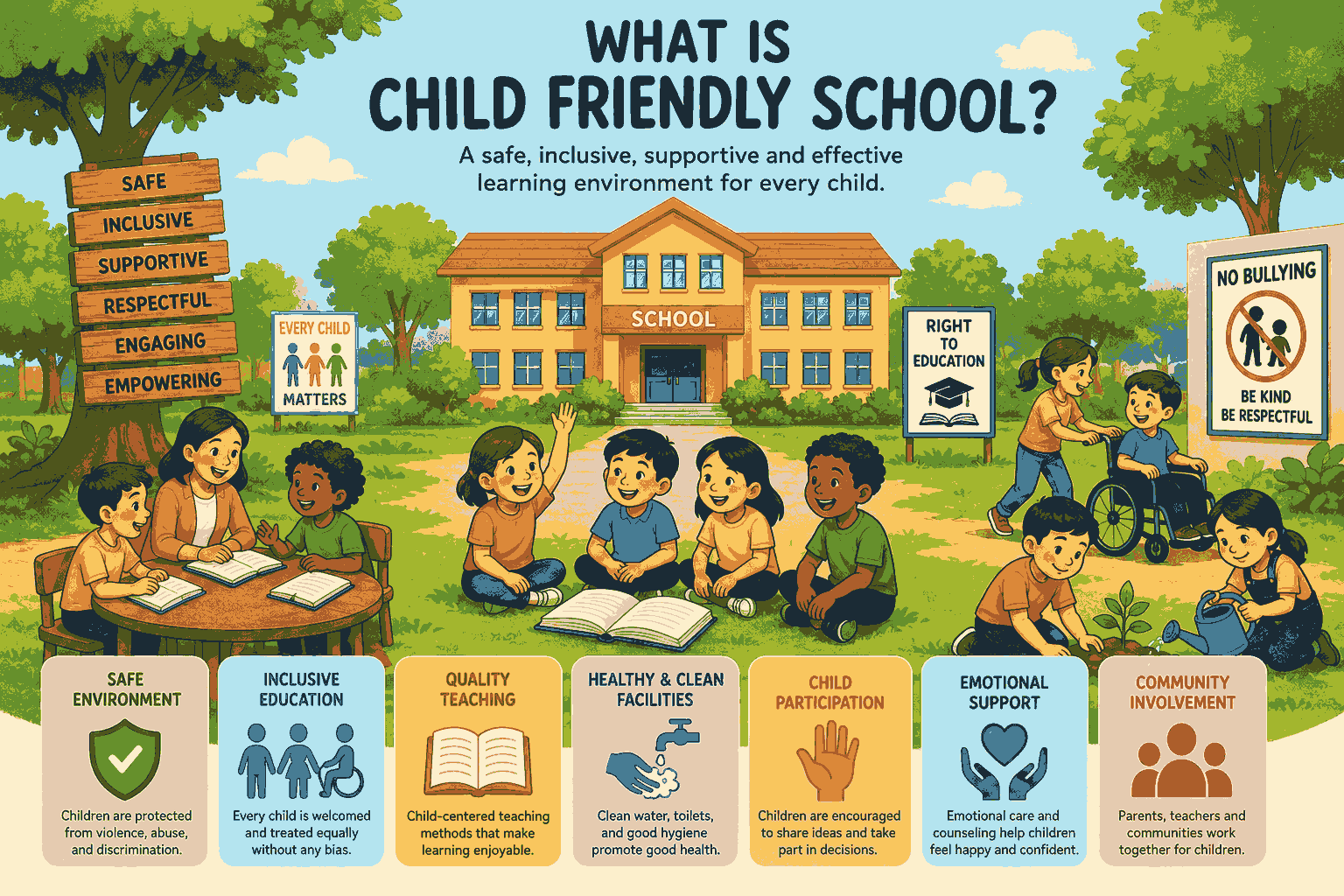
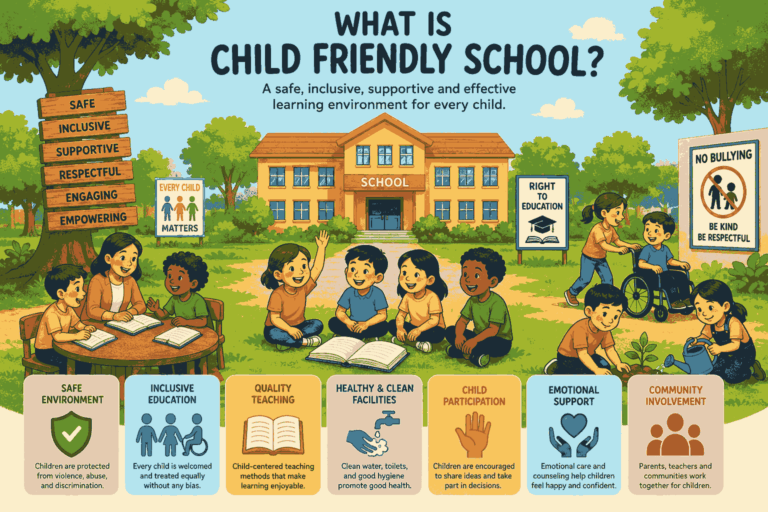
What Is Child Friendly School?
A child friendly school is a school that creates a safe, healthy, inclusive, protective, and effective learning environment for children. It focuses on the total well-being of students and ensures that every child receives quality education without fear, discrimination, abuse, or neglect.
In a child friendly school, children are treated with dignity and respect. Teachers encourage participation, creativity, teamwork, and confidence. The school environment also supports children emotionally and physically while helping them achieve academic success.
According to UNICEF Child Friendly Schools Framework, a child friendly school should be:
- Inclusive
- Protective
- Gender-sensitive
- Effective for learning
- Healthy and safe
- Community-involved
This model has been adopted in many countries to improve the quality of education and protect children’s rights.
History and Origin of Child Friendly Schools
The concept of a child friendly school was introduced by UNICEF in the 1990s as part of efforts to improve global education standards and protect children’s rights.
The idea became more popular after the adoption of the United Nations Convention on the Rights of the Child, which emphasized that every child has the right to quality education, protection, participation, and development.
The child friendly school model was created to solve problems such as:
- Violence in schools
- Poor learning environments
- Gender discrimination
- Child abuse
- Bullying
- Lack of sanitation
- Exclusion of disabled children
- Poor teacher-student relationships
Today, many governments and educational organizations use the child friendly school approach to make schools more welcoming and effective for learners.
Main Features of a Child Friendly School
A true child friendly school contains several important characteristics that make learning enjoyable and meaningful for students.
1. Safe and Protective Environment
Safety is one of the most important features of a child friendly school. Children should feel secure while learning.
This includes protection from:
- Bullying
- Physical punishment
- Sexual harassment
- Violence
- Abuse
- Discrimination
The school should also have:
- Secure buildings
- Clean classrooms
- Emergency procedures
- Proper supervision
Children learn better when they feel safe emotionally and physically.
2. Inclusive Education
A child friendly school welcomes every child regardless of:
- Gender
- Religion
- Tribe
- Disability
- Social class
- Language
- Ethnicity
No child should be denied education because of their background or condition.
Inclusive classrooms help students learn respect, equality, and teamwork.
Schools may provide:
- Wheelchair access
- Special learning support
- Flexible teaching methods
- Equal opportunities
This ensures that every child participates actively in learning.
3. Child-Centered Teaching Methods
Traditional education often focuses only on teachers talking while students listen. However, a child friendly school encourages active learning.
Teachers use methods such as:
- Group discussions
- Practical activities
- Games
- Storytelling
- Creative projects
- Problem-solving exercises
These methods help children understand lessons better and build confidence.
Children are encouraged to ask questions and express their opinions freely.
4. Healthy Learning Environment
Health plays a major role in education. A child friendly school promotes good hygiene and healthy living.
This includes:
- Clean toilets
- Safe drinking water
- Proper ventilation
- School health services
- Handwashing facilities
- Nutritious meals where possible
Healthy students attend school regularly and perform better academically.
5. Gender Sensitivity
A child friendly school treats boys and girls equally.
Both genders should have:
- Equal access to education
- Equal classroom participation
- Equal leadership opportunities
- Equal protection
Schools should also teach students respect and fairness between genders.
Gender-sensitive education helps reduce discrimination and empowers children.
6. Community Participation
Parents and communities are important partners in education.
A child friendly school encourages:
- Parent-teacher meetings
- Community support
- School development programs
- Child protection awareness
When families participate in education, children often perform better in school.
7. Emotional and Psychological Support
Children may face emotional challenges from home, society, or personal experiences.
A child friendly school supports students emotionally through:
- Counseling
- Friendly teachers
- Encouragement
- Positive discipline
- Mental health awareness
This helps children develop self-esteem and emotional stability.
Importance of Child Friendly Schools
The importance of child friendly schools cannot be overemphasized. These schools improve both education quality and child development.
Improves Academic Performance
Children learn faster when they feel happy and secure. Fear and punishment often reduce concentration and interest in learning.
Child friendly schools motivate students to participate actively in class activities.
Reduces School Dropout Rates
Unsafe or unfriendly schools often cause children to stop attending classes.
When schools become welcoming and supportive, students are more likely to remain in school and complete their education.
Promotes Child Rights
A child friendly school respects the rights of children by ensuring:
- Protection
- Participation
- Equality
- Education access
This helps children grow into responsible citizens.
Encourages Confidence and Creativity
Children are given opportunities to express themselves freely.
This improves:
- Creativity
- Communication skills
- Leadership abilities
- Confidence
Builds Better Relationships
Positive relationships between teachers and students create trust and understanding.
Children become more comfortable asking questions and sharing concerns.
Supports Mental Health
Supportive schools reduce stress, fear, and anxiety among students.
This contributes to emotional well-being and healthier development.
Characteristics of Teachers in a Child Friendly School
Teachers play a major role in creating a child friendly school environment.
A good teacher in a child friendly school should be:
- Patient
- Respectful
- Caring
- Supportive
- Encouraging
- Fair
- Understanding
They should avoid:
- Harsh punishment
- Humiliation
- Discrimination
- Favoritism
Teachers should also encourage participation and creativity in the classroom.
How Child Friendly Schools Protect Children
Protection is one of the strongest foundations of a child friendly school.
Schools can protect children by:
Creating Anti-Bullying Policies
Bullying affects children emotionally and academically. Schools should punish bullying and promote kindness.
Providing Guidance and Counseling
Counselors help children handle emotional, social, and academic challenges.
Reporting Abuse Quickly
Teachers and staff should know how to report child abuse cases properly.
Teaching Child Protection Awareness
Students should learn about:
- Personal safety
- Good behavior
- Respect
- Healthy relationships
Difference Between Traditional Schools and Child Friendly Schools
| Traditional School | Child Friendly School |
|---|---|
| Teacher-centered | Child-centered |
| Strict punishment | Positive discipline |
| Limited participation | Active student participation |
| Fear-based learning | Supportive learning |
| Focus only on academics | Focus on total child development |
| Less emotional support | Strong emotional support |
This comparison shows why many education experts support the child friendly school approach.
Benefits of Child Friendly Schools
There are many benefits associated with child friendly schools.
1. Better Learning Outcomes
Students understand lessons more effectively in supportive environments.
2. Increased Attendance
Children enjoy attending schools where they feel safe and valued.
3. Stronger Social Skills
Students learn cooperation, communication, and teamwork.
4. Reduced Violence
Positive discipline helps reduce aggression and school violence.
5. Higher Self-Esteem
Children become more confident and motivated.
6. Equal Opportunities
Every child receives fair treatment and access to learning.
Challenges Facing Child Friendly Schools
Although the child friendly school model is beneficial, some schools still face challenges.
Lack of Funding
Many schools struggle to provide quality facilities and resources.
Poor Teacher Training
Some teachers are not trained in child-centered teaching methods.
Overcrowded Classrooms
Large student populations make personal attention difficult.
Inadequate Facilities
Some schools lack:
- Clean water
- Toilets
- Libraries
- Learning materials
Cultural Barriers
In some communities, discrimination or outdated beliefs may affect equal education access.
How Schools Can Become More Child Friendly
Schools can improve by adopting practical child friendly policies.
Train Teachers Properly
Teachers should learn modern teaching and child protection methods.
Improve School Facilities
Schools should provide:
- Clean classrooms
- Safe playgrounds
- Functional toilets
- Health services
Encourage Student Participation
Students should have opportunities to share ideas and contribute to school activities.
Strengthen Parent Involvement
Parents should participate actively in school programs and child development.
Promote Equality
Schools must treat all students fairly regardless of gender or background.
Examples of Child Friendly School Activities
Some common activities in child friendly schools include:
- Debate competitions
- Group learning
- Sports
- Art programs
- Leadership clubs
- Health campaigns
- Anti-bullying campaigns
- School gardening
- Counseling sessions
These activities improve learning and child development.
Role of Government in Promoting Child Friendly Schools
Governments have a major responsibility in supporting child friendly education.
They can help by:
- Funding schools
- Training teachers
- Providing educational materials
- Creating child protection laws
- Monitoring school safety
- Promoting equal education
Many countries now include child friendly policies in their national education systems.
Role of Parents in Child Friendly Education
Parents also contribute greatly to child friendly schools.
They should:
- Support their children emotionally
- Attend school meetings
- Monitor academic progress
- Encourage discipline positively
- Communicate with teachers
Strong parent involvement improves children’s academic success and behavior.
Child Friendly School and Modern Education
Modern education is shifting toward student-centered learning because children learn best in supportive environments.
Technology, creativity, emotional intelligence, and collaboration are now important educational goals.
A child friendly school prepares children for modern society by helping them develop:
- Critical thinking
- Communication skills
- Confidence
- Creativity
- Leadership abilities
This makes them better prepared for future careers and life challenges.
Conclusion
A child friendly school is a learning environment where children feel safe, respected, protected, healthy, and encouraged to learn. It focuses not only on academic success but also on the emotional, social, physical, and psychological development of students.
Such schools promote equality, participation, child rights, creativity, and positive relationships between teachers and students. They also reduce bullying, improve attendance, and help children develop confidence and life skills.
As education continues to evolve globally, the child friendly school model remains one of the best approaches for improving learning and ensuring every child receives quality education in a supportive environment.
Parents, teachers, governments, and communities all have important roles to play in making schools more child friendly for future generations.
FAQs About Child Friendly School
1. What is the meaning of child friendly school?
A child friendly school is a school that provides a safe, healthy, inclusive, and supportive environment where children can learn effectively and develop fully.
2. What are the characteristics of a child friendly school?
The main characteristics include safety, inclusiveness, child-centered learning, gender equality, emotional support, healthy facilities, and community involvement.
3. Why is a child friendly school important?
A child friendly school improves academic performance, protects children’s rights, reduces dropout rates, supports mental health, and encourages confidence and creativity.







+ There are no comments
Add yours